

Swelling around a single back tooth often comes from trapped food, plaque buildup, gum irritation, a wisdom tooth issue, or a developing dental infection.
The location offers a useful clue, but it cannot confirm the cause. Swelling accompanied by severe pain, pus, fever, a bad taste, or facial swelling needs prompt dental attention because it may indicate an abscess.
Common Causes of Swelling Around a Back Tooth
Food Trapped Between the Teeth
Small pieces of meat, popcorn hulls, seeds, or fibrous vegetables can become wedged between back teeth. The pressure may irritate the gum and cause a tender, swollen spot.
Back tooth pain may develop when trapped food, tooth decay, gum infection, or a wisdom tooth irritates the surrounding tissue. Pain that worsens when biting or comes with swelling should be checked by a dentist.
Careful flossing may remove the trapped material. Avoid repeatedly digging into the gum with fingernails, toothpicks, or sharp objects, since this can injure the tissue and push debris deeper.
Plaque and Early Gum Disease
Plaque is a sticky film of bacteria that continually forms on teeth. When it remains along the gumline, it can cause gingivitis. The affected gum may become red, puffy, tender, or likely to bleed during brushing and flossing.
Bleeding gums when flossing may occur when plaque has irritated the gumline. Gentle daily flossing can help, but repeated bleeding, swelling, or pain should be checked by a dentist.
Gingivitis often affects several teeth, but it may look worse around one molar if that area is difficult to clean. Crowded teeth, dental restorations, and limited access at the back of the mouth can make plaque removal harder.
A Partially Erupted Wisdom Tooth
Swelling behind the last molar commonly involves a wisdom tooth that has only partly emerged. A flap of gum may cover part of the tooth, creating a space where food and bacteria collect.
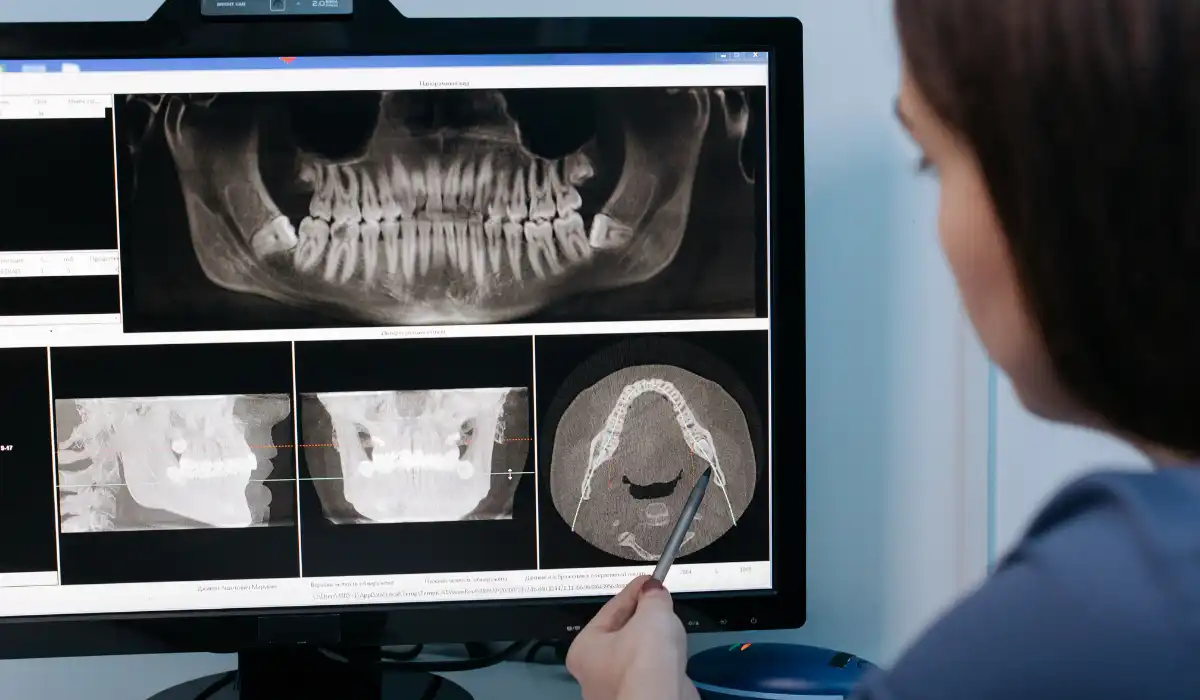
If swelling and infections keep returning, wisdom tooth extraction may be recommended. A dentist will examine the tooth and use X-rays to decide whether removal is necessary.
Inflammation around a partly erupted wisdom tooth is called pericoronitis. It may cause gum pain, swelling, bad breath, a bad taste, pus, or difficulty opening the mouth.
A Gum Abscess
A periodontal abscess is a pocket of infection that develops in the gum beside a tooth. It may look like a red, swollen bump or pimple and can cause throbbing pain, tenderness, pus, or an unpleasant taste.
An Gum abscess requires dental treatment. Trying to squeeze or puncture it at home can spread bacteria and worsen the infection.
Infection Inside the Tooth
A deep cavity, cracked tooth, injury, or failed dental restoration can allow bacteria to reach the soft pulp inside a tooth. Infection may then spread through the root and cause swelling in the nearby gum.
Possible clues include sensitivity to hot or cold temperatures, pain when biting, a constant toothache, or a darkened tooth. In some cases, the nerve dies and the pain decreases even though the infection remains.
Irritation or Minor Injury
Hard foods, forceful brushing, sharp chips, dental appliances, or accidentally biting the gum may cause local swelling. This type of irritation often improves after the source is removed and the tissue has time to heal.
A dentist should examine swelling that repeatedly appears in the same place. A rough filling, damaged crown, cracked tooth, or unusual bite may be continually irritating the gum.
What Can You Do at Home?
Gently brush the area with a soft-bristled toothbrush and fluoride toothpaste. Floss carefully around the tooth to remove plaque or food, but stop if flossing causes sharp pain or becomes trapped beneath a restoration.
Rinsing with warm salt water may soothe irritated tissue and help keep the area clean. Avoid placing aspirin directly against the gum, as it can damage the tissue. Over-the-counter pain relief may help when taken according to the label and when medically safe for you.
Choose soft foods and chew on the opposite side temporarily. Avoid smoking, very hot foods, and repeatedly touching the swollen area.
These steps may ease mild irritation, but they cannot cure an abscess, deep cavity, advanced gum disease, or infected wisdom tooth.
How Will a Dentist Treat It?
Treatment depends on the cause. Trapped debris and plaque may be removed with professional cleaning. Gum disease may require scaling and root planing to clean below the gumline.
Pericoronitis treatment may include cleaning around the wisdom tooth, improving access to the area, medication when appropriate, or removing the wisdom tooth if infections keep returning.
An abscess may require drainage, root canal treatment, gum treatment, or tooth extraction. Antibiotics are generally considered when infection has spread, causes systemic symptoms, or presents additional medical risks. They do not replace treatment of the infected tooth itself.
When Should You See a Dentist?
Arrange a dental appointment if swelling lasts longer than a couple of days, keeps returning, or occurs with toothache, pain when biting, bleeding gums, pus, or a bad taste.
Seek urgent dental care for fever, rapidly increasing swelling, difficulty opening the mouth, swollen glands, or swelling that spreads into the cheek or jaw.
Difficulty breathing or swallowing, severe facial swelling, or swelling extending toward the eye or neck requires emergency medical attention because a dental infection may be spreading.
How to Reduce the Risk of Future Swelling?
Brush twice daily with fluoride toothpaste and clean between the teeth every day. Pay extra attention behind the final molars, where plaque and food are easily missed.
Attend routine dental examinations so cavities, gum pockets, damaged fillings, and wisdom tooth problems can be detected early. Avoid using sharp objects to clean around the gums.
Final Thoughts
Swelling around one back tooth may come from trapped food, but it can also signal gum disease, an infected wisdom tooth, tooth decay, or a dental abscess. Trusted dental abscess information can help explain why persistent swelling needs attention.
Gentle cleaning and warm salt-water rinses may help minor irritation. Persistent swelling, pus, severe pain, fever, or facial swelling should be assessed by a dentist according to reliable urgent dental care guidance.
FAQs
Yes. Trapped food can press against and irritate the gum. Gentle flossing may help, but continuing pain or swelling should be examined by a dentist.
A partly erupted wisdom tooth is a common cause. Food and bacteria can collect under the gum flap, causing inflammation known as pericoronitis.
Mild irritation may improve with careful cleaning. Swelling caused by an abscess, decay, gum disease, or an impacted wisdom tooth usually needs professional treatment.
A gum abscess may resemble a red or dark swollen bump, boil, or pimple. It may release pus and cause pain or a bad taste.
No. Squeezing or puncturing the bump can spread infection and damage tissue. A dentist should diagnose the cause and drain an abscess safely when necessary.
Emergency care is needed when swelling causes difficulty breathing or swallowing, spreads rapidly across the face or neck, or occurs with severe illness.