

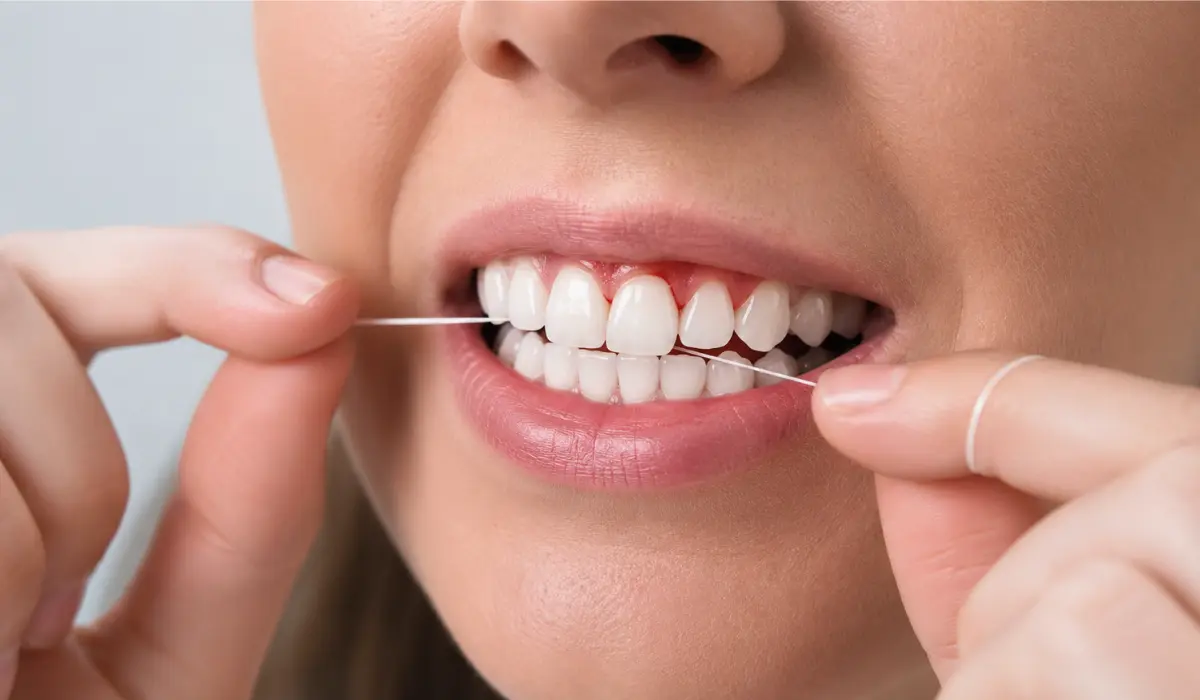
Bleeding gums when flossing can feel alarming, especially if it happens often. In many cases, it is linked to plaque buildup, irritated gums, or starting a new flossing habit after a long break. However, gums should not bleed regularly. Healthy gums are usually firm, pink, and do not bleed easily during brushing or flossing.
Occasional light bleeding may improve with better oral care, but frequent bleeding can be an early sign of gum inflammation. Understanding the cause can help you protect your teeth, gums, and overall oral health.
What Does Bleeding Gums When Flossing Mean?
Bleeding during flossing usually means your gums are irritated, inflamed, or sensitive. This often happens when plaque collects along the gumline and between the teeth.
Plaque is a sticky layer of bacteria that forms on teeth. If it is not removed through brushing and flossing, it can harden into tartar. The CDC notes that tartar cannot be removed by regular brushing and usually needs professional dental cleaning.
In some people, bleeding may happen because of rough flossing, a hard toothbrush, pregnancy-related gum changes, certain medicines, or health conditions.
Common Causes Of Bleeding Gums When Flossing
1. Gingivitis
Gingivitis is one of the most common reasons for bleeding gums. It is the early stage of gum disease and happens when plaque irritates the gums.
Mayo Clinic explains that plaque and tartar can irritate the gum tissue, causing swelling and easy bleeding. If gingivitis is treated early, it can often be reversed with good oral hygiene and dental care.
Common signs of gingivitis include:
- Red or swollen gums
- Bleeding while brushing or flossing
- Tender gums
- Bad breath
- Gum sensitivity
2. New Flossing Routine
If you recently started flossing after not doing it regularly, your gums may bleed at first. The American Dental Association’s MouthHealthy resource notes that gums may bleed a little when someone starts a new flossing routine, and this often improves as the gums adjust.
However, the bleeding should gradually reduce. If it continues for more than one to two weeks, you may need a dental checkup.
3. Flossing Too Hard
Flossing should clean between the teeth, not cut into the gums. Snapping the floss down harshly can injure delicate gum tissue.
Use a gentle back-and-forth motion. Curve the floss around each tooth in a C-shape and slide it slightly below the gumline without forcing it.
4. Plaque And Tartar Buildup
Even if you brush daily, plaque can still build up between teeth where a toothbrush cannot reach. Over time, plaque hardens into tartar.
Tartar along the gumline can keep irritating the gums and may lead to gum disease. Once tartar forms, a dentist or dental hygienist usually needs to remove it.
5. Periodontitis
If gingivitis is ignored, it can develop into periodontitis, a more serious gum infection. Periodontitis can damage the soft tissue and bone that support the teeth. Mayo Clinic states that untreated periodontitis can eventually cause loose teeth or tooth loss.
Possible signs include:
- Gums pulling away from teeth
- Loose teeth
- Pain while chewing
- Persistent bad breath
- Pus around gums
- Gum recession
Other Reasons Your Gums May Bleed
Bleeding gums are not always caused by poor oral hygiene. Other possible causes include:
- Vitamin C or vitamin K deficiency
- Pregnancy-related hormone changes
- Smoking or tobacco use
- Diabetes
- Blood-thinning medicines
- Poorly fitting dentures or dental appliances
- Mouth injuries
- Certain immune or blood-related conditions
If bleeding is heavy, sudden, or happens without brushing or flossing, it is best to speak with a dentist or doctor.
How To Stop Bleeding Gums When Flossing?
Brush Gently Twice A Day
Use a soft-bristled toothbrush and fluoride toothpaste. Brush for two minutes twice daily. Avoid scrubbing too hard because this can damage gums and enamel.
Floss Every Day
Do not stop flossing just because your gums bleed slightly. Gentle daily flossing helps remove plaque between teeth and may reduce gum inflammation over time.
Use The Right Flossing Technique
Move the floss slowly between the teeth. Do not snap it into the gums. Clean both sides of each tooth and reach slightly below the gumline.
Try Interdental Brushes
Some people find interdental brushes easier than string floss, especially if they have gaps, braces, bridges, or limited hand movement.
Get Professional Dental Cleaning
If tartar has built up, home care alone may not fix the problem. A professional cleaning can remove hardened plaque and help the gums heal.
Rinse After Meals
Rinsing with water after eating can help remove food particles and reduce plaque buildup. A dentist may also recommend an antimicrobial mouthwash if gum inflammation is present.
When Should You See A Dentist?
You should see a dentist if bleeding gums when flossing continue for more than one to two weeks, happen every time you floss, or come with swelling, pain, bad breath, loose teeth, or gum recession.
The NHS lists bleeding during brushing, flossing, or eating hard foods as a common symptom of gum disease.
Do not ignore ongoing gum bleeding. Early treatment can prevent more serious gum problems later.
Can Bleeding Gums Heal On Their Own?
Mild gum bleeding may improve if it is caused by a new flossing routine or minor irritation. However, if plaque, tartar, or gum disease is the cause, the gums may not fully heal without proper oral care and dental treatment.
The key is consistency. Brush gently, floss daily, and schedule dental cleanings as advised by your dentist.
How To Prevent Bleeding Gums?
To reduce the risk of bleeding gums:
- Brush twice daily with a soft toothbrush
- Floss or clean between teeth every day
- Visit a dentist regularly
- Avoid smoking or tobacco
- Limit sugary foods and drinks
- Drink enough water
- Manage diabetes or other health conditions
- Replace your toothbrush every three to four months
Good oral hygiene helps protect both your gums and teeth.
FAQs
1. Is it normal for gums to bleed when flossing?
A small amount of bleeding may happen when you first start flossing, but regular bleeding is not normal. It may be a sign of gum inflammation.
2. Should I stop flossing if my gums bleed?
No, do not stop flossing completely. Use a gentle technique and continue daily. If bleeding does not improve within one to two weeks, see a dentist.
3. Can bleeding gums mean gum disease?
Yes, bleeding gums can be an early sign of gingivitis or gum disease. Other signs include swollen gums, tenderness, bad breath, and gum recession.
4. How long does it take for gums to stop bleeding?
If bleeding is from a new flossing routine, it may improve within about a week. If it continues, plaque, tartar, or gum disease may be involved.
5. What vitamin deficiency causes bleeding gums?
Vitamin C and vitamin K deficiencies may contribute to bleeding gums. However, gum disease is a more common cause, so a dental checkup is still important.
References
1. NHS
Gum Disease
https://www.nhs.uk/conditions/gum-disease/
2. CDC
About Periodontal Gum Disease
https://www.cdc.gov/oral-health/about/gum-periodontal-disease.html
3. Mayo Clinic
Gingivitis: Symptoms and Causes
https://www.mayoclinic.org/diseases-conditions/gingivitis/symptoms-causes/syc-20354453