

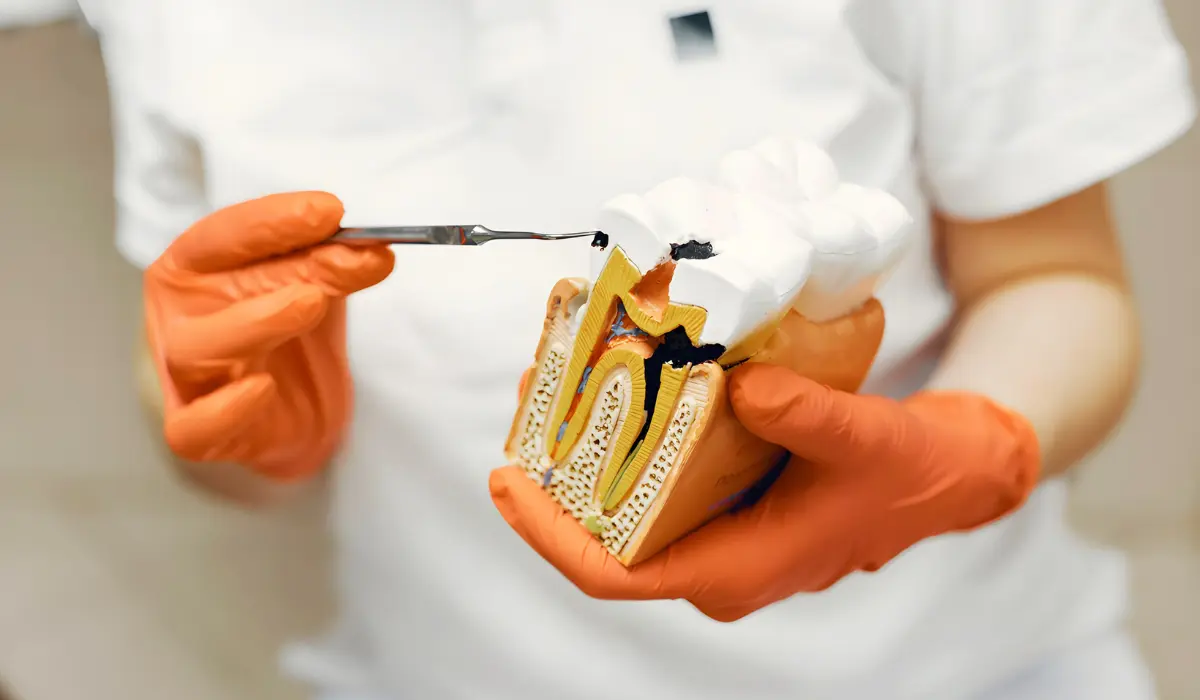
Root canal symptoms often start with tooth pain, sensitivity, swelling, or discomfort when chewing. These signs may happen when the soft inner part of the tooth, called the pulp, becomes infected or inflamed. A root canal may be needed when deep decay, cracks, gum disease, or an abscess affects the tooth pulp.
Not every toothache means you need a root canal. However, pain that keeps returning, gets worse, or comes with swelling should be checked by a dentist.
What Are Root Canal Symptoms?
Root canal symptoms are warning signs that the inside of a tooth may be damaged, infected, or inflamed. Common symptoms include strong tooth pain, pain when biting, lingering hot or cold sensitivity, swollen gums, and a pimple-like bump on the gum.
These symptoms can develop slowly or suddenly. Some people feel mild sensitivity at first, while others notice severe throbbing pain or swelling. In some cases, tooth pain after filling may also be a warning sign if the cavity was deep or the nerve became irritated.
Severe Tooth Pain
Severe tooth pain is one of the most common signs that something is wrong inside the tooth. The pain may feel sharp, deep, throbbing, or constant.
It may also spread to the jaw, ear, face, or nearby teeth. Back tooth pain can be harder to identify because molars sit close together and pain may feel like it is coming from more than one tooth.
Pain that wakes you at night or continues despite basic care should not be ignored.
Pain When Biting or Chewing
Biting pain can happen when the tooth root, nerve, or surrounding tissue is irritated. It may feel like pressure, soreness, or a sharp pain when the upper and lower teeth touch.
This symptom may be linked to a deep cavity, cracked tooth, infection, or inflammation around the root. If chewing on one side becomes uncomfortable, schedule a dental visit before the pain gets worse.
Lingering Sensitivity To Hot Or Cold
Tooth sensitivity is common, but lingering sensitivity is more concerning. For example, cold water may cause pain that stays for several seconds or minutes after the drink is gone.
Heat sensitivity can also be a warning sign. If hot tea, coffee, or soup causes deep tooth pain, the pulp may be irritated or infected.
Quick sensitivity may come from enamel wear or gum recession. Lingering pain needs a closer dental exam.
Swollen Or Tender Gums
Swollen gums near one tooth may suggest infection around the root. The gum may look red, feel sore, or become tender when touched.
Sometimes the swelling is small. Other times, it may spread to the jaw or face. Swelling linked with tooth pain can be a sign of a dental abscess, which is a pocket of pus caused by infection.
A Pimple-Like Bump On The Gum
A small bump on the gum near a painful tooth may be a draining infection. It can look like a pimple and may release pus or fluid.
This bump may come and go. Even if the pain reduces after drainage, the infection may still be present inside or around the tooth.
Do not pop or squeeze it. A dentist should examine it properly.
Darkening or Discoloration of One Tooth
A tooth that becomes darker than the teeth around it may have internal damage. This can happen after trauma, nerve damage, or long-term pulp changes.
Tooth discoloration alone does not always mean a root canal is needed. But if it appears with pain, swelling, or sensitivity, it should be checked.
Chipped, Cracked, or Broken Tooth
A cracked or broken tooth can allow bacteria to enter deeper layers of the tooth. This can irritate or infect the pulp over time.
Even a small crack may cause pain when chewing. Sometimes the pain comes and goes, making it easy to ignore. Early treatment may help protect the tooth before infection spreads.
Bad Taste or Bad Breath
A bad taste in the mouth can happen when infection or pus drains from the gum. Bad breath may also occur if bacteria are present around the infected tooth.
This symptom is more concerning when it appears with swelling, gum bumps, or tooth pain. It should be checked quickly.
Can You Need a Root Canal Without Pain?
Yes, it is possible to need a root canal without strong pain. Sometimes the tooth nerve becomes damaged slowly, and symptoms may be mild.
A dentist may find the issue during an exam or X-ray. This is why regular dental checkups are important, even when your teeth feel normal.
Root Canal Symptoms vs Regular Toothache
A regular toothache may be short-term and linked to food stuck between teeth, mild gum irritation, or temporary sensitivity.
Root canal-related pain is more likely to be deep, repeated, lingering, or linked with swelling. Pain when biting, heat sensitivity, gum bumps, or facial swelling are stronger warning signs.
Practical Tips to Prevent Tooth Infection
Good daily care can lower the risk of deep decay and tooth infection. Brush twice daily with fluoride toothpaste, clean between teeth, drink water, and limit frequent sugary snacks.
Treat cavities early. A small filling is usually simpler than waiting until decay reaches the tooth nerve.
Also, protect teeth from cracks. Avoid chewing ice, hard candy, pens, or fingernails. Use a mouthguard if you grind your teeth or play contact sports.
When to Seek Professional Help?
See a dentist if you have tooth pain that lasts more than a day or two, pain when biting, lingering sensitivity, swollen gums, or a gum bump.
Seek urgent dental care if you have facial swelling, fever, trouble opening your mouth, difficulty swallowing, severe throbbing pain, or pus near the tooth. These symptoms may suggest a spreading dental infection. Understanding gum abscess stages is also important because a small gum swelling can progress to pus, severe pain, and deeper infection if left untreated.
How To Avoid Root Canal Treatment?
You can lower the chance of needing root canal treatment by treating dental problems early. Small cavities, cracked fillings, and tooth sensitivity are easier to manage before decay reaches the tooth nerve.
Brush twice daily with fluoride toothpaste, clean between teeth, limit sugary snacks, and drink plenty of water. Regular dental checkups also help find early tooth decay, gum problems, and weak enamel before they become painful.
Do not ignore warning signs like lingering sensitivity, pain when biting, swollen gums, or a small bump on the gum. Early dental care can help protect the natural tooth and reduce the risk of infection, severe toothache, or pain after root canal treatment later.
Final Thoughts
Root canal symptoms should not be ignored, especially when tooth pain becomes severe, returns often, or comes with swelling. Early care may help save the natural tooth and prevent the infection from spreading.
A dentist can examine the tooth, take X-rays, and decide whether a filling, crown, root canal treatment, or another option is needed. Cracked tooth symptoms, such as pain when biting, sensitivity, or sharp pain that comes and goes, should also be checked early.
FAQs
Early symptoms may include tooth sensitivity, mild pain when chewing, gum tenderness, or discomfort that keeps returning. These signs can worsen if untreated.
You may need a root canal if you have severe tooth pain, lingering sensitivity, swelling, gum bumps, pain when biting, or signs of infection.
Pain may reduce temporarily, but infection inside a tooth usually does not fully heal without dental treatment. A dentist should check ongoing symptoms.
Yes, swelling near a painful tooth may suggest infection or abscess. Facial swelling, fever, or trouble swallowing needs urgent dental attention.
Yes, a cracked tooth can let bacteria reach the inner tooth. This may cause pain when biting, sensitivity, inflammation, or infection.
Ignoring symptoms can allow infection to spread, damage surrounding bone, worsen pain, or lead to tooth loss. Early dental care is safer.
Reference
- Root canal treatment overview
https://www.aae.org/patients/root-canal-treatment/ - Root canal symptoms and recovery
https://my.clevelandclinic.org/health/treatments/21759-root-canal