

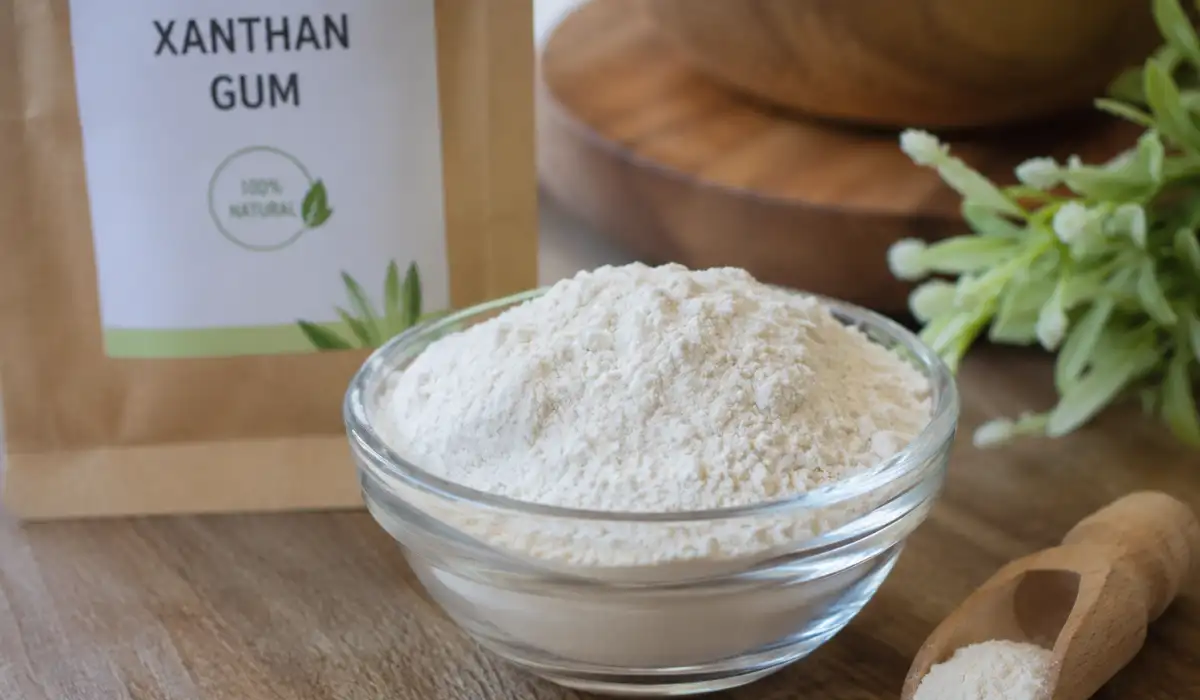
Xanthan gum appears in everything from salad dressing and ice cream to toothpaste and gluten-free bread.
For most healthy adults, xanthan gum is not considered harmful when consumed in the small quantities normally found in food. Food-safety authorities permit its use as a thickener, stabilizer and texturizer. However, consuming a large amount may cause temporary digestive discomfort in some people.
What Is Xanthan Gum?
Xanthan gum is a carbohydrate known as a polysaccharide. Manufacturers produce it by fermenting sugar with the bacterium Xanthomonas campestris. The fermented material is processed, dried and ground into a fine powder.
Food manufacturers use xanthan gum because even a small amount can thicken liquids, improve texture, and prevent ingredients from separating. It is commonly found in sauces, salad dressings, ice cream, dairy products, gluten-free bread, baked goods, soups, gravies, plant-based milk, protein drinks, and nutritional products.
Is Xanthan Gum Safe to Eat?
Current safety evaluations generally support xanthan gum’s use in food.The review found no concern regarding genetic damage or cancer based on the available evidence. Adults also tolerated amounts much higher than those normally present in food, although some participants experienced abdominal discomfort.
This distinction is important. Eating a product containing a small amount of xanthan gum is different from consuming several spoonfuls of concentrated xanthan gum powder.
Possible Xanthan Gum Side Effects
The most likely side effects involve the digestive system. Xanthan gum absorbs water and is not fully digested in the same way as sugar or starch. Gut bacteria may break down part of it during fermentation.
A large intake of xanthan gum may cause digestive symptoms such as bloating, increased gas, abdominal fullness, loose stools, more frequent bowel movements, and mild stomach discomfort.
These effects are more likely when someone suddenly consumes a concentrated amount rather than the small quantity used in processed foods.
People with sensitive digestion may notice symptoms at lower amounts. Personal tolerance can vary, so the ingredient may be worth monitoring when symptoms repeatedly occur after eating certain packaged foods.
Does Xanthan Gum Harm Gut Health?
Research shows that some bacteria in the human gut can break down xanthan gum. A 2022 microbiome study found that this ability is common in people from industrialised populations and may involve cooperation between different intestinal bacteria.
This finding does not prove that xanthan gum damages the gut. It mainly shows that the intestinal microbiome can adapt to a widely consumed food additive. Scientists are continuing to study how thickeners and emulsifiers affect gut bacteria, digestion and inflammation.
Animal and laboratory findings should not automatically be treated as evidence that ordinary dietary exposure causes disease in humans. More well-designed human studies are needed before firm conclusions can be made about long-term microbiome effects.
Why Is Xanthan Gum Used in Gluten-Free Foods?
Gluten gives traditional wheat dough elasticity and helps baked products maintain their structure. Gluten-free flour lacks this natural binding network.
Xanthan gum helps gluten-free dough hold moisture, trap air and remain less crumbly. Without it, some gluten-free breads, cakes and pizza bases may fall apart or become unusually dry.
People who tolerate xanthan gum do not need to avoid it simply because it is an additive. However, anyone who experiences bloating after eating gluten-free products should check the full ingredient list, as other fibres, sugar alcohols, gums, or large serving sizes may also contribute to digestive symptoms. These digestive effects are unrelated to dental infections, so concerns about Gum Abscess Stages should be assessed separately by a dentist.
Who Should Be More Careful?
People who experience repeated digestive problems after consuming foods containing xanthan gum may benefit from reducing their intake temporarily and monitoring their symptoms.
Extra care is also sensible when using pure xanthan gum powder at home. Because it thickens rapidly and absorbs water, it should be mixed according to recipe directions rather than swallowed dry or taken in large spoonfuls.
Infant formulas, medical foods and products used to thicken liquids for swallowing difficulties should be used according to professional guidance.
How to Reduce Digestive Discomfort?
When xanthan gum appears only near the end of a packaged food’s ingredient list, the amount is usually relatively small. People who suspect sensitivity can compare products with and without gums and keep a simple food-and-symptom record.
Avoid eliminating multiple food groups without a clear reason. Persistent bloating, diarrhoea, abdominal pain, unexplained weight loss or blood in the stool should be evaluated by a healthcare professional rather than blamed solely on one food additive.
Simple daily habits can help prevent gum recession and protect the tissue supporting your teeth. Gentle brushing, daily flossing, avoiding tobacco, and regular dental checkups reduce irritation and help control plaque before it damages the gumline.
Conclusion
Xanthan gum is not considered bad for most people when eaten in ordinary food quantities. It has been reviewed by food-safety authorities and is legally used as a thickener and stabilizer.
Large or concentrated amounts can cause gas, bloating or loose stools, particularly in people with sensitive digestion. The best approach is to consider your personal tolerance, serving size and overall diet instead of assuming that every food containing xanthan gum is unhealthy.
FAQs
1. Is xanthan gum a natural ingredient?
Xanthan gum is produced through bacterial fermentation of sugars. It is then processed into a purified powder used to improve the texture, thickness and stability of foods.
2. Can xanthan gum cause bloating?
Yes. Large quantities may increase fermentation and water retention in the digestive tract, potentially causing gas, bloating, abdominal fullness or loose stools in sensitive individuals.
3. Is xanthan gum safe to eat every day?
Ordinary food exposure is generally considered safe. Problems are more likely with unusually large amounts or concentrated powders rather than small quantities in sauces, baked goods and dressings.
4. Is xanthan gum gluten-free?
Pure xanthan gum does not contain gluten and is commonly used to improve gluten-free baking. People with coeliac disease should still check products for cross-contamination statements.
5. Does xanthan gum cause inflammation?
Current human evidence does not establish that normal dietary amounts cause inflammation. Laboratory and animal research cannot automatically demonstrate the same effect in people eating typical foods.
6. Should people with IBS avoid xanthan gum?
Not everyone with irritable bowel syndrome needs to avoid it. People who repeatedly notice bloating or diarrhoea after consuming gums should discuss an individual elimination trial with a dietitian.
References
- European Food Safety Authority: Re-evaluation of xanthan gum, E415. (European Food Safety Authority)