

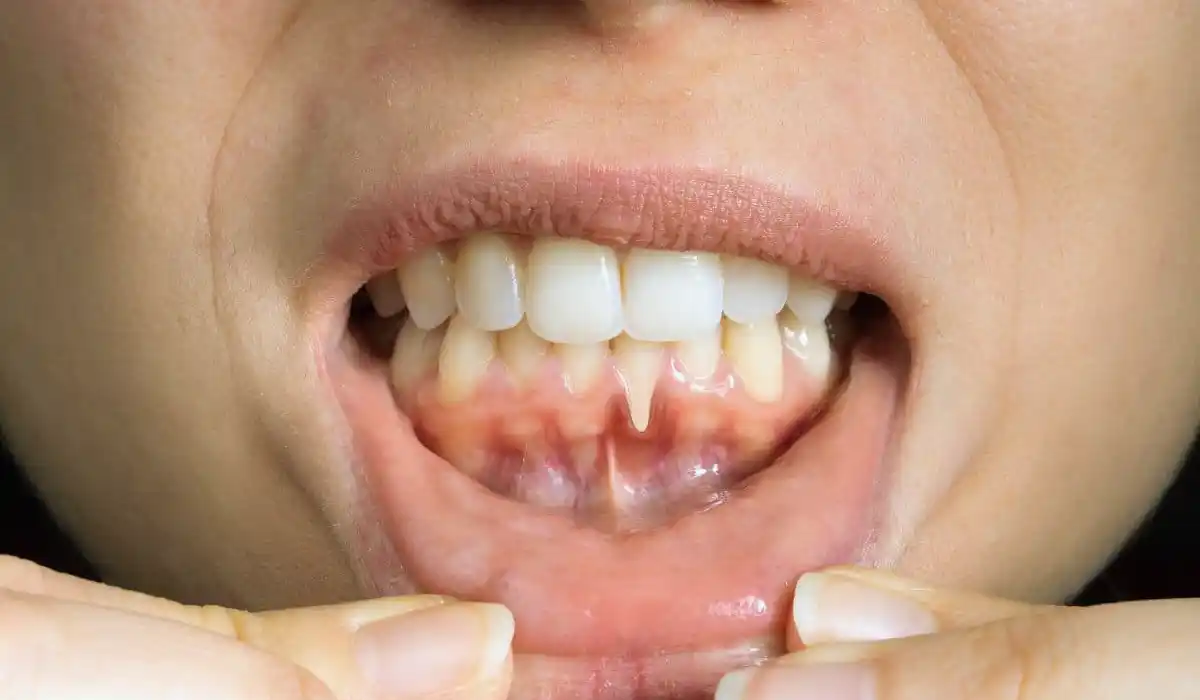
Nearly half of American adults over 30 live with some form of gum disease. That matters more than it sounds. Gum recession is one of the earliest visible signs, and by the time a tooth looks longer than it used to, tissue has already been lost that won’t grow back on its own.
Learning how to prevent gum recession is far cheaper and less painful than fixing it, and most of that work happens at your bathroom sink, not the dentist’s chair.
What Gum Recession Actually Is?
Gum recession is the gradual pulling back of gum tissue from the tooth, which leaves exposed tooth roots that were never meant to sit in the open.
Roots have no protective enamel, so once they show, they’re vulnerable to decay and tooth sensitivity to cold, hot, and sweet foods. Recession is usually slow. That’s exactly why people miss it.
Causes and Risk Factors of Gum Recession
The causes of gum recession are rarely limited to a single factor. Aggressive brushing with a hard-bristled toothbrush can gradually damage the gumline over time, while periodontal disease may destroy the tissue and bone that support the teeth. Smoking or vaping can reduce blood flow to the gums and may hide warning signs such as bleeding.
Teeth grinding, also known as bruxism, can place excessive pressure on the gumline. Genetics and naturally thin gum tissue can also increase the risk, as some people are born with less protective gum tissue.
You cannot change your genetics or thin gum tissue, but you can control the aggressive brushing, the smoking, and the plaque that feeds gum disease. That is where prevention lives.
Signs and Symptoms to Watch For
The first signs of gum recession are teeth that look longer, a small notch or step you can feel near the gumline with your tongue, and new tooth sensitivity to cold. Bleeding while brushing or flossing daily is another early flag.
If a tooth suddenly feels loose or your bite shifts, the recession has likely progressed into deeper periodontal disease and needs prompt attention.
Daily Habits That Prevent Recession
Here is the practical routine. None of it is expensive, and it beats gum graft surgery on every measure.
Switch to a soft-bristled toothbrush. Hard and even medium bristles do real damage. A soft-bristled toothbrush costs a couple of dollars and cleans just as well when used correctly. Replace it every three months, or sooner if the bristles splay.
Fix your brushing technique. Aggressive brushing is the most common cause of recession in people who otherwise take good care of their teeth. Hold the brush at a 45-degree angle to the gums and use short, gentle strokes. Do not saw side to side with force. A useful trick: hold the brush like a pencil, not a fist, which naturally reduces pressure.
Commit to flossing daily. Brushing skips the surfaces between teeth where plaque hardens into tartar and triggers gum disease. Flossing daily is non-negotiable for gum disease prevention. If string floss frustrates you, a water flosser works, though it does not fully replace the mechanical scrape of floss.
Add an antimicrobial mouth rinse. An antimicrobial mouth rinse reduces the bacteria that drive periodontal disease, especially in spots your brush misses. Use it after brushing, not instead of it. Look for one with chlorhexidine or essential oils; an antimicrobial mouth rinse is a supplement, never a substitute for flossing daily.
A common mistake worth flagging: people who worry about their gums often brush harder, which is exactly backward. Gentle and consistent wins over hard and occasional every time.
Lifestyle Changes to Protect Your Gums
Quitting smoking is the single highest-impact change for anyone serious about how to prevent gum recession. Smoking doubles the risk of gum disease and slows healing after any dental work. If you grind your teeth, ask your dentist about a night guard; untreated teeth grinding keeps stressing the gumline no matter how well you brush.
Cutting back on acidic drinks and sugary snacks also gives your gums a break. These changes may support efforts to Heal Swollen Gums and help maintain healthy gum tissue.
Professional Care and Checkups
See a dentist every six months, and more often if you already show signs of recession or have a history of periodontal disease. At those visits, a hygienist removes tartar you physically cannot reach at home.
When pockets have formed below the gumline, the standard treatment is scaling and root planing, a deep cleaning that removes bacteria from exposed tooth roots and smooths the surfaces so the gums can heal. A dentist may also check for infection and explain the Gum Abscess Stages if swelling, pus, or severe pain is present. Scaling and root planing can be uncomfortable, but it is a routine procedure that may control gum disease before surgery becomes necessary.
Treatment Options If Recession Has Already Started
Gum recession treatment depends on severity. Mild cases respond to better technique plus scaling and root planing. For advanced cases with significant exposed tooth roots, gum graft surgery moves healthy tissue over the bare area to protect the root and reduce tooth sensitivity to cold.
Gum graft surgery is effective and predictable, but it is a real procedure with real cost, typically $600 to $1,200 per tooth in the U.S. as of 2025. Prevention is cheaper.
When to See a Dentist or Periodontist?
Book a visit as soon as you notice a longer-looking tooth, a persistent sensitive spot, or bleeding that does not settle after a week of gentle flossing daily. A general dentist handles most cases; a periodontist specializes in advanced gum disease and gum graft surgery.
Conclusion
Gum recession is quiet, permanent, and largely preventable. The formula is not complicated: a soft-bristled toothbrush used gently, flossing daily, an antimicrobial mouth rinse, no smoking, and regular checkups so problems get caught while they are still small. Genetics and thin gum tissue tilt the odds for some people, but daily habits decide the outcome for most.
Protect your healthy gums now, and you spare yourself the cost and discomfort of gum graft surgery later.
FAQs
1.Can receding gums grow back on their own?
No. Gum tissue does not regenerate once lost. You can stop it from worsening, but restoring coverage over exposed tooth roots requires gum graft surgery.
2.What are the first signs of gum recession?
Teeth that look longer, new tooth sensitivity to cold, a small notch near the gumline, and bleeding when you brush.
3.Does gum recession always require surgery?
No. Mild to moderate recession is managed with a soft-bristled toothbrush, corrected technique, flossing daily, and scaling and root planing when needed.
4.Can you reverse gum recession naturally at home?
You cannot reverse it at home, but good habits and an antimicrobial mouth rinse can halt its progress and protect what remains.
5.How often should you see a dentist to prevent gum recession?
Every six months for most people, and every three to four months if you have periodontal disease or thin gum tissue.
6.Does smoking really affect my gums?
Yes. Smoking is a major risk factor for gum disease and slows healing after any gum recession treatment.
References
- Centers for Disease Control and Prevention: (CDC)