

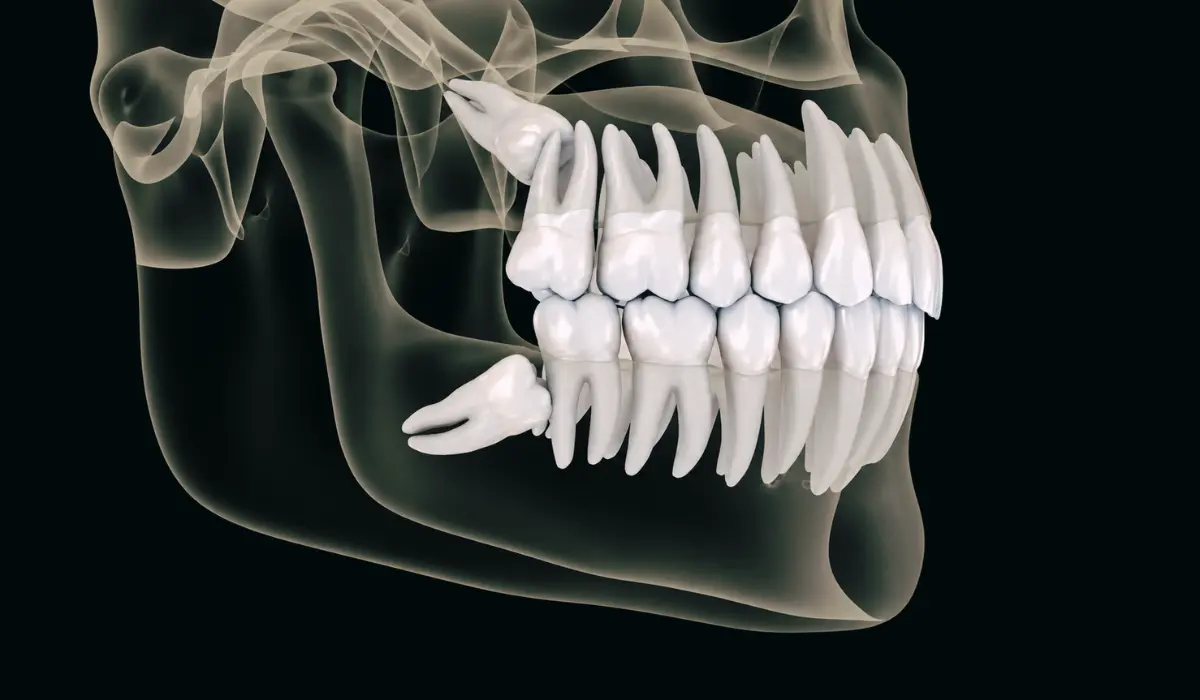
Wisdom teeth, also called third molars, are the last set of teeth to come in, usually between the ages of 17 and 25. For some people they erupt without much trouble. For many others, there isn’t enough space in the jaw to accommodate them, and that’s when pain, swelling, and other uncomfortable symptoms start to show up. Knowing what wisdom tooth pain actually feels like, and what it might signal, can help you decide when a quick home remedy is enough and when it’s time to call a dentist.
Why Wisdom Teeth Cause Pain in the First Place?
The jaw often runs out of room by the time wisdom teeth are ready to emerge. When there isn’t enough space, the tooth can come in at an angle, get stuck partway through the gum, or push against the molar next to it. Dentists call this an impacted tooth, and it’s one of the most common reasons wisdom teeth become painful. Impacted wisdom teeth create pressure on surrounding teeth and gum tissue, which is where most of the discomfort begins.
Common Wisdom Tooth Pain Symptoms
Soreness or Throbbing at the Back of the Jaw
The most noticeable symptom is usually a dull ache or throbbing sensation at the very back of the mouth, near the last molar. This pain can stay localized or spread toward the ear, jaw joint, or side of the face, making it hard to pinpoint exactly where the problem started.
Swollen or Tender Gums
When a wisdom tooth only partially breaks through the gum line, a flap of gum tissue is left covering part of the tooth. Food and bacteria can get trapped underneath that flap, leading to redness, swelling, and tenderness. This condition, known as pericoronitis, is one of the most frequent causes of wisdom tooth pain, and it tends to flare up when the immune system is already under stress, such as during a cold or upper respiratory infection.
Difficulty Opening the Mouth Fully
Swelling and inflammation around an erupting wisdom tooth can extend into the jaw muscles, making it harder to open the mouth wide. Dentists refer to this as trismus, and it’s often a sign that the infection or irritation has moved beyond the gum tissue itself.
Bad Breath or an Unpleasant Taste
Trapped food particles and bacteria around a partially erupted tooth are difficult to clean away, even with regular brushing and flossing. This buildup can produce a persistent bad taste or breath odor that doesn’t improve with mouthwash alone.
Swelling in the Jaw, Cheek, or Neck
In more advanced cases, swelling can spread beyond the gum and into the cheek, jaw, or lymph nodes in the neck. Swollen lymph nodes usually mean the body is actively fighting an infection, and this symptom, especially combined with fever, should not be ignored.
Headaches and Jaw Stiffness
Constant pressure from an erupting or misaligned wisdom tooth can radiate upward, triggering tension headaches or a stiff, achy jaw. Some people also notice a popping or clicking sound when they chew, which can point to the jaw joint being affected.
Shifting of Nearby Teeth
As a wisdom tooth pushes against the molar in front of it, it can gradually move nearby teeth out of position. This crowding is sometimes subtle at first, showing up as a change in how the bite feels rather than obvious pain.
When Wisdom Tooth Pain Signals An Emergency?
Most wisdom tooth discomfort is manageable with good oral hygiene, warm salt water rinses, and over the counter pain relief like ibuprofen or paracetamol. However, certain symptoms call for prompt dental or medical attention: facial swelling that keeps growing, fever, difficulty swallowing, or any tightness in the throat or trouble breathing. These signs can point to an infection spreading beyond the mouth, which needs to be addressed quickly.
Managing Mild Wisdom Tooth Pain At Home
For milder cases, a few simple habits can ease discomfort while the gums settle down:
- Rinse gently with warm salt water several times a day to reduce bacteria and soothe inflamed tissue.
- Keep the area as clean as possible with careful brushing and interdental cleaning.
- Use an antimicrobial mouthwash if recommended by a dentist.
- Take over the counter pain relievers as directed, swallowed rather than placed directly on the gum.
- Stick to soft foods until the swelling and tenderness improve.
If pain lingers for more than three or four days, keeps coming back, or gets worse instead of better, it’s a signal that home care alone isn’t going to resolve the underlying issue.
When It’s Time to See a Dentist?
Recurring gum infections, ongoing pain, visible decay in a neighboring tooth, or ongoing crowding are all reasons to have wisdom teeth evaluated. A dentist can take an X-ray to see exactly how the teeth are positioned and whether extraction is the right next step. Catching these issues early often means a simpler procedure and a smoother recovery compared to waiting until an infection has already taken hold.
Wisdom tooth pain is common, but it isn’t something to just push through indefinitely. Paying attention to how the symptoms present, and how long they stick around, makes it much easier to know when it’s a passing irritation and when it’s time to get a professional opinion.
Frequently Asked Questions
Mild pain from a wisdom tooth breaking through the gum often settles within three to four days with good oral hygiene and basic pain relief. Pain that continues past that window, or keeps returning, usually means the tooth needs a proper evaluation rather than more time.
Yes. Many people experience flare ups of pain and swelling that ease off for weeks or months before returning. This pattern, known as chronic recurrent pericoronitis, tends to keep happening until the tooth is removed.
It’s fairly common. Because the nerves around the back molars connect to a wider network in the jaw and face, pain can radiate outward and feel like an earache or general jaw soreness rather than staying confined to the gum.
Yes. A tooth can be pressing against the jawbone or an adjacent molar well before it breaks through the gum, and that pressure alone can cause aching or tenderness.
A dentist can manage most cases, including infections and swelling. The ER becomes the right call if there’s difficulty swallowing or breathing, rapidly spreading facial swelling, or a high fever, since these can indicate the infection is moving beyond the mouth.
In most cases, yes. Once the tooth causing the pressure or infection is extracted, the site heals and the recurring pain typically stops. Some mild soreness during recovery is normal for a few days afterward.
References
- Renton T, Wilson NHF. Problems with erupting wisdom teeth: signs, symptoms, and management. Br J Gen Pract. 2016;66(649):e606-e608.
https://doi.org/10.3399/bjgp16X686509 - National Institute for Health and Care Excellence. Guidance on the extraction of wisdom teeth, TA1. London: NICE; 2000.
https://www.nice.org.uk/guidance/ta1
Related Articles: